Tuesday, 27 March 2012

Explain why you think Summer Camp and Hurt are Postmodern or not.

Postmodernism, Postmodernism is something that many struggle to get their heads, a way of life that people fail to understand, it’s a theory that is often defined as being a rejection of Modernism, obviously, a unforeseen breaking of barriers, as well as a mixing of different cultures. Postmodernism can be seen be commonly seen in films and television products, but also in music.

Music is often stereotyped, your image, culture and social group often sets the standard of what genres you listen to, or in the eyes of people, what you music you ‘should’ listen to. Now, Postmodernism rejects this theory, different genres can be mixed, e.g. Hip Hop and Soul, look at ‘Watch the Throne’ for instance.

There are many bands that are now able to create music that they are not stereotyped with, all through Postmodernism. Look at Summer Camp, an English Two-Piece band from England. If somebody threw some headphones, and played one of their songs to you, you’d most probably think to yourself, “Your typical Indie band”, whereas if somebody played you the video to ‘Round for Moon’, it’s a whole new ball game. Before they’d released any actual images of themselves, Summer Camp still did a lot of marketing. This is a superb example of how you can use to Postmodernism to mess with peoples minds. For their album artworks and videos, Summer Camp used footage and images that were representative of American culture during the 1980’s, therefore you’d get the impression that they were a band from the states who grew up during the 1980’s, and few fans of television shows such as Different Strokes, and The Breakfast Club.

A critic of Postmodernism would say that Postmodernists are self indulgent and only care for themselves, doing things for their own enjoyment. Which is why I believe Summer Camp shows many signs of Postmodernism, they release a mysterious image of themselves, purely because if not aren’t offended if people think of being people who they are not.

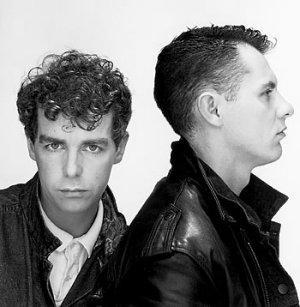
Hurts, another British band, a band who have won NME Awards (Anti-pop awards), and got automatically categorised into being a indie, when front man Theo Hutchencraft was quoted as saying “This award is a victory for pop music”, after their triumph at the NME Awards. Which in my opinion is a great example of Postmodernism, they have broken boundaries of ‘pop’ and mainstream music, and made them accepted by organisations that aren’t as commercialised.

Hurts are more times than not selected into a ‘indie’ genre, but the music they create is actually a continuation of the Synth Pop era that took the UK by storm in the 1980’s, and was very pop friendly. This follows Jonathon Kramer’s theory that Postmodern music is a continuation of break, which is exactly what Hurts do, as they have revived synth pop music in a respectable manner.

Looking at all of Kramer’s theory on music, that is not the only theory that Hurts follow. He said audiences are both niche and mainstream. Bingo, that, without doubt applies to Hurt, their style of play adopts of mainstream audience, through the music they play, but their artistic essence is something that captures and attracts a very niche market.

They also follow bricolage, they have given this music a new meaning, although they obviously sound more modern compared to predecessors, they still follow suit in their musical play. Though Hurts don’t distribute the same meanings in their songs as bands such as Pet Shop Boys and Soft Cell did.

I firmly believe in my valid opinion, and I’m in no doubt that Hurts, though not traditionally, still hold Postmodern values, due to their mixing in cultures, and in the way that they create mainstream, but it attracts a niche market.

Finally, what does the future hold for Postmodern music? I couldn’t possibly say, for a genre such as Hip Hop, I believe that Postmodernism vibes will continue to run, it’s in their culture, and sampling is often vital to tracks, also in dance music, Postmodern music will most probably live on for a long time, the ‘success’ of it is something that I doubt, because the music created often fails to reach a big market, and therefore doesn’t gain much critique. However, in an alternative/indie music scene, something which I follow, I believe Hurts are a very unique band, which you rarely see nowadays, also Summer Camp, they made themselves stand out from a very overpopulated crowd of generic indie, using Postmodernism very well. However, apart from this, I don’t think that Postmodernism will have a particularly ‘successful’ future in the genre. This is mainly because many indie bands follow a strict culture, many a band who go on stage with a guitar in hand will, such as The Courteeners will show they’ve been influenced by The Stone Roses, and The Smiths, literally.

That’s just how they like it, though.

Tuesday, 6 March 2012

Hurts, research for presentation.

Hurts...


The synthpop music genre, has today become iconic within 80's culture, with bands such as The Human League and Soft Cell receieving overwhelming success with their hits. Hurts style of play pay's homage to their predecessors from 80's, but instead of attracting mainstream audiences, in contrast Hurts' music is very Niche, which follows Kramer's theory that music shows references to many cultures and traditions. Furthermore, it also argues the Kramer's point that music is both Niche and Mainstream.


Bricolage on Tainted Love, play Gloria Hunter, Soft Cell, and Marilyn Manson, talk about how the song have been developed, and given a new meaning, it started off a song you'd expect to be played in a 60's Cafe with dancing about to it, followed by Soft Cell's version, which became the theme to students parties, followed by Manson's version, who acknowledged the previous theme, but turned his version gothic, and almost made the song feel 'dirty' with the accompanying video.


Double act, this also pay's another homage to the 80's synth pop wave, with bands such as Soft Cell, Erasure and Pet Shop, also being acknowledged as double acts.


Hurts also follow Jean Baudrillard's theory of Postmodernism, he emphasises that barriers between art and social are no longer existent, during the time of Synthpop, Marc Almond, Andy Bell and Neil Tennant for example, and were often categorised, and put into a , whereas a Synthpop band today, such as Hurts, have shut that barrier, and are not frowned upon whatsoever for their extravagant on stage antics, and personalities.


Hurts, show signs of trying to grab the attention of critics from different audiences, though, through the release of singles. Their debut album 'Happiness' had 6 singles released, which is approximately half the album.

1. Better Than Love
2. Wonderful Life
3.Stay
4. Sunday
5. Illuminated
6. Blood, Tears & Gold

Plus 'All I want for Christmas is New Years Day' (Non-album Track) 

 Compare this to The Horrors, who released have released 3 singles from their album 'Skying', which is less than 1/3 of the album. This shows how Hurts are incorporating into modern music life, using ITunes etc. to get extra recognition not for their albums as a whole, but rater for the singles that are released from the album, individually. In my opinion, you can argue at this idea agree's with Kramer's view that "music shows disdain for the often unquestioned value of structural unity", as they go against other bands of their genre such as The Horrors, by releasing a shed load of singles, and will be contempt at being viewed as an 'Album Band'.


On the subject of Hurts' song Wonderful Life, the bands frontman Theo Hutchcraft said "It's basically based on two extremes: the first being a man who wants to kill himself and the second being love at first sight", Hurts once again follow suit with Kramer and his opinions on music, he said music today presents mutilple meanings, which is precisily what this song does.


To add onto that Hurts' lyrics also take you in to this Hyperreal world, where the stories of your life are excessive and extreme. These of this variety are something we buy into, even though it's likely you'll only ever see something like this on 'Eastenders', or if not, a British Drama such as 'This is England'.


Hurts in a sense, and not coincidentally, are ironic, their image and music on face value has all the makings of a pop band, but from one side of the spectrum, they are the complete opposite, in the fashion that most pop bands sing about happy/fairy tale endings, whereas Hurts discuss the bad, the not so happy endings, which is just honesty in retrospective.

The pragmatics the following songs conjure up are complete opposites, although the songs could be considered to have many similarities.


Basically, Hurts are just a in depth 'pop' band, but that's just how they like it.

Thursday, 1 March 2012

Jonathon Kramer.

Media Theorist Jonathan Kramer says "the idea that postmodernism is less a surface style or historical period than an attitude. Kramer goes on to say 16 "characteristics of postmodern music, by which I mean music that is understood in a postmodern manner, or that calls forth postmodern listening strategies, or that provides postmodern listening experiences, or that exhibits postmodern compositional practices."
According to Kramer (Kramer 2002, 16–17), postmodern music":
1. is not simply a repudiation of modernism or its continuation, but has aspects of both a break and an extension
2. is, on some level and in some way, ironic
3. does not respect boundaries between sonorities and procedures of the past and of the present
4. challenges barriers between 'high' and 'low' styles
5. shows disdain for the often unquestioned value of structural unity
6. questions the mutual exclusivity of elitist and populist values
7. avoids totalizing forms (e.g., does not want entire pieces to be tonal or serial or cast in a prescribed formal mold)
8. considers music not as autonomous but as relevant to cultural, social, and political contexts
9. includes quotations of or references to music of many traditions and cultures
10. considers technology not only as a way to preserve and transmit music but also as deeply implicated in the production and essence of music
11. embraces contradictions
12. distrusts binary oppositions
13. includes fragmentations and discontinuities
14. encompasses pluralism and eclecticism
15. presents multiple meanings and multiple temporalities
16. locates meaning and even structure in listeners, more than in scores, performances, or composers